

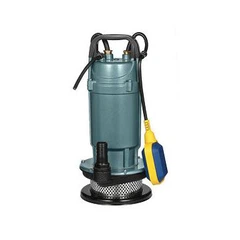
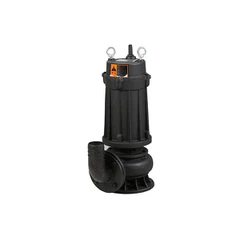
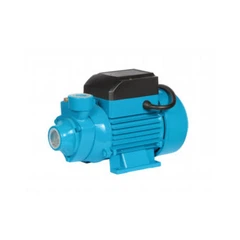
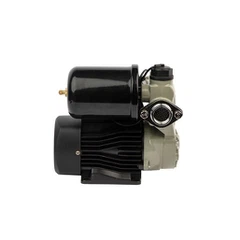
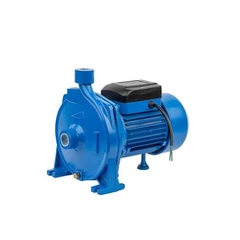

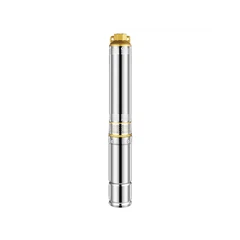


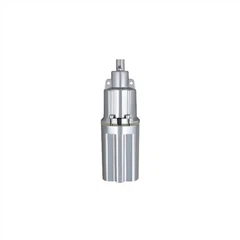

Centrifugal Pump
Your Premier Centrifugal Pump manufacturer!
Zhejiang Binter Electric Machinery Co., Ltd is one of the major professional manufacturers of water pumps. With more than 20 years of experience in this field, specializing in submersible pumps,self-priming pumps, JET pumps, QB pumps, centrifugal pumps, CIRCULATOR PUMPS ETC, Located in the "Chinese Pump Town"-Daxi Town, Wenling City, Zhejiang.
After-Sale Warranty
We offer a warranty of 12 months, We will always include 2% of the order quantity of free spare parts which can be easily damaged in each shipment, for your usual easy maintenance.
24H Online Service
Our customer service representatives are available 24/7 to assist you with any inquiries, or after-sales services.

International Certification
Our products meet the highest quality requirements as stipulated in ISO9001, ISO14000:14001 SGS guidelines, CE and our stringent quality control system.
Global Shipping
We have customers from both the domestic market and overseas market. Our main sales market: North America 80%, Middle East 10%, Asia 10%.

Centrifugal pumps are among the most widely used types of pumps in various industries. They are designed to move liquids from one place to another by converting mechanical energy from a motor into kinetic energy, which drives the fluid through the pump and into the discharge pipe. Centrifugal pumps are mechanical devices used to transport fluids by converting mechanical energy from an external source (e.g., an electric motor) into kinetic energy in the fluid being pumped.


Advantages Of Centrifugal Pump
Smooth Flow
Centrifugal flow is laminar and non-pulsating allowing them to be used with flowmeters easily.
Low Maintenance & Easy To Maintain
Due to their simple uncomplicated design, they are often maintained without special tools or equipment.
Efficient
As the internal elements are free to rotate, they are very efficient when handling low-viscosity fluids.
Low Cost
Due to their simplicity of design and wide availability, they are one of the lowest initial costs of pumps. If specified correctly they can also provide the lowest lifetime cost for an application.
Versatile
They can be designed to handle a multitude of liquids and solids by changing the materials of certain parts, or impeller designs.
Low Infrastructure Costs
As Centrifugal pumps can be run against a closed valve for short periods without damage, additional accessories such as pressure relief valves and other devices are not required.
The mechanism of a centrifugal pump is relatively simple. It consists of three main components: an impeller, a casing, and a shaft. The impeller is a rotating component that contains blades or vanes that move the fluid. The casing is a stationary component that surrounds the impeller and guides the fluid to the discharge point. The shaft connects the impeller to the motor that rotates it. Centrifugal pumps are commonly used in industrial, domestic, and agricultural applications due to their versatility, simplicity, and efficiency.

Types Of Centrifugal Pump
There are several types of centrifugal pumps, each designed for specific applications and operating conditions. Here are some common types:
End-Suction Centrifugal Pump
This is the most common type of centrifugal pump, characterized by a single suction inlet and a single discharge outlet. It is widely used in water supply systems, HVAC systems, and general industrial applications.
Split Case Centrifugal Pump
This type of pump has a horizontally split casing, allowing easy access to internal components for maintenance and repairs. It is suitable for high flow rate and high-pressure applications, such as water distribution, irrigation, and firefighting.
Multistage Centrifugal Pump
As the name suggests, this pump consists of multiple stages with impellers stacked together. Each stage adds pressure to the fluid, allowing the pump to handle high-pressure applications, including boiler feedwater, high-rise building water supply, and industrial processes.
Vertical Turbine Pump
This pump is designed to operate with the motor located above the ground level, while the pump unit is submerged in the fluid. It is commonly used in deep well applications, water supply from underground sources, and irrigation systems.
Self-Priming Centrifugal Pump
This type of pump has the ability to evacuate air and prime itself without external assistance. It is commonly used in applications where the pump needs to be primed automatically, such as sewage pumping, dewatering, and irrigation.
Magnetic Drive Centrifugal Pump
In this pump, the impeller is driven by a magnetic coupling, eliminating the need for a mechanical seal. It is commonly used for handling corrosive or hazardous fluids, as it prevents leakage and eliminates the risk of contamination.
Components of Centrifugal Pumps
Centrifugal Pump Shaft
It is the central part of the pump which rotates together with the impeller when connected. The shaft is linked to the prime mover in order to get the power. The shaft fits perfectly with the ball bearing.
Centrifugal Pump Impeller
It comprises an arrangement of backward-curved vanes. It is mounted to an electric motor’s shaft. This is known as the rotating part of the centrifugal pump enclosed in a casing that is watertight. The impeller rotates and imparts velocity to a liquid.
Centrifugal Pump Casing
This is a passage surrounding the impeller, which will be airtight. It is made in such a way that the water’s kinetic energy discharged at the outlet is changed to pressure energy before the water leaves the casing and is delivered into the delivery pipe. It works as a cover so that it protects the system. The casing transforms the velocity developed by the impeller into a stable flow. There are basically three types of casings in centrifugal pumps namely volute casing, vortex casing and casing with guide blades.
Suction Pipe With a Strainer and Foot Valve
The suction pipe has two ends. The first end is connected to the pump’s inlet and one end is dipped into the water in a sump. At the suction pipes’ lower end, a foot valve is fitted. The valve only opens in an upward direction as it will be a one-way type. To prevent the entry of unknown and unwanted bodies into the suction pipe, a strainer is fitted at the end of the pipe.
Delivery Valve
The delivery valve also has two ends. One end is connected to the pump’s outlet and the other end delivers the water at a required height.
Application of Centrifugal Pump
Centrifugal pumps are commonly used in various industries and applications for pumping liquids, such as water, chemicals, and sewage. Some common application areas of centrifugal pumps include:
Water supply and distribution
Centrifugal pumps are widely used in municipal water systems for supplying water to homes, businesses, and other facilities.
01
Irrigation
Centrifugal pumps are used in agriculture for irrigation purposes to pump water from wells, rivers, or reservoirs to water crops.
02
Wastewater treatment
Centrifugal pumps are used in wastewater treatment plants to pump sewage and other waste fluids for treatment and disposal.
03
Chemical processing
Centrifugal pumps are used in chemical processing industries to pump various chemicals, acids, and solvents for manufacturing processes.
04
Oil and gas industry
Centrifugal pumps are used in the oil and gas industry for pumping crude oil, natural gas, and other fluids in drilling, production, and refining operations.
05
HVAC systems
Centrifugal pumps are used in heating, ventilation, and air conditioning (HVAC) systems for circulating water and other fluids to heat and cool buildings.
06
Power generation
Centrifugal pumps are used in power plants for circulating cooling water, boiler feed water, and other fluids in steam and gas turbine systems.
07
Marine and offshore applications
Centrifugal pumps are used in marine and offshore industries for various applications, such as bilge pumping, ballast pumping, and fire-fighting systems.
08
Food and beverage industry
Centrifugal pumps are used in the food and beverage industry for pumping liquids, such as milk, fruit juices, and beer, during production and processing.
09
Mining and construction
Centrifugal pumps are used in mining and construction industries for dewatering, slurry pumping, and other fluid transfer applications.
10
8 Things To Consider When Selecting A Centrifugal Pump
In a perfect world, pump systems are inexpensive, long-lasting, energy-efficient, and simple to maintain. Although there may be a perfect pump system for your specific processing application, there are still trade-offs you’ll make. Which should you budge on, and which should you leave as a priority when selecting a centrifugal pump?
Best Efficiency Point (BEP)
Before selecting a pump, you need to know what optimal pump performance looks like for your operation. One method is to determine the best efficiency point (BEP), which all pump manufacturers will provide. For example, a centrifugal pump should operate between 50-120% of its BEP for best long-term performance.
Range Of Conditions
Just as crucial as BEP is knowing the full desired range of performance based on operating conditions. Flow rates, net positive suction head (NPSH), pressure ratings, and temperatures, are a few examples. The point is to know what you need out of the pump system before finding equipment that gives you desired results.
Margin Of Error
Until the pump is operating in the real world, it’s hard to determine the exact performance standards you require. You should be able to have fairly accurate estimates to establish acceptable ranges. Even so, pad your expectations, so there is some margin for error. You may find a centrifugal pump that checks most boxes and is within an acceptable range. From here, you can dial it in with fine-tuning or customizations.
Process Materials & Conditions
Varying centrifugal pump applications is the reason for a handful of pump designs. Beyond the desired performance characteristics, you will also need to understand the pumped materials. There are fluids, natural gases, liquids with solid particulates, slurries, chemicals, and plain water. Some are acidic and corrosive, damaging seals and interior components, while others produce clogs and cavitation. Select the correct pump and construction materials that will handle the fluids and materials you are processing.
Environmental Conditions
Where you are planning to install and operate the pump system is also a significant factor. Consider whether it’s operating in outside, the temperature of the atmosphere it’s in, and humidity. Pump systems are designed to run effectively and efficiently for its environment - know what to expect for success.
Safety
Safety is another critical concern. You want a safe pump system that keeps your operators safe and the environment protected. Many operations are under strict environmental regulations and you want to avoid leaks to protect from contamination.
Maintenance
All pumps require routine maintenance - some more than others - based on the operating factors above. Understand the pump’s maintenance requirements and make sure you are not getting equipment that will end up providing more uptime rather than extended downtime for maintenance and repairs.
Customization
Most centrifugal pumps are designed to allow for customization. There are after-market solutions and alternative components that can be supplied by the pump manufacturer. The key thing to remember is that selecting the best centrifugal pump for you takes time, research, calculations, and planning.
FAQ
Q: What is the main function of a centrifugal pump?
Q: What is the principle of centrifugal pump?
Q: When should a centrifugal pump be used?
Q: What is an example of a centrifugal pump?
Q: What is the difference between air pump and centrifugal pump?
Q: Does a centrifugal pump need a motor?
Q: Why can't a centrifugal pump handle air?
Q: Which direction does a centrifugal pump rotate?
Q: How long can a centrifugal pump run continuously?
Q: What is centrifugal pump in simple words?
Q: How do you calculate the efficiency of a centrifugal pump?
Q: What is the purpose of a centrifugal pump curve?
Q: How do you prevent water hammer in a centrifugal pump system?
Q: Can a centrifugal pump be used for both liquid and gas applications?
Q: What is the difference between a single-stage and a multistage centrifugal pump?
Q: How do you calculate the NPSH required for a centrifugal pump?
Q: Can a centrifugal pump operate at variable speeds?
Q: What are the common wear parts in a centrifugal pump?
Q: Can a centrifugal pump handle viscous fluids?
Q: How do you prevent pump cavitation in a centrifugal pump?
Welcome to buy or wholesale quality and durable centrifugal pump at the most competitive price from our factory. Our company, BINTER ELECTRIC, is one of the leading centrifugal pump manufacturers and suppliers in China. We can offer you the quotation consultation.
Small Centrifugal Pump, Centrifugal Pump, Small Centrifugal Water Pumps , Centrifugal Pumps , Centrifugal Water Pump